
Cassette Toilet Vs Black Tank
As the population of the world increases and resources become more scarce, there has been a shift in focus from “bigger is better” to sustainability. One way that people are trying to be sustainable is by switching from black tanks to cassette toilets. What’s the difference? Let’s take a look at what cassette toilet vs black tank.
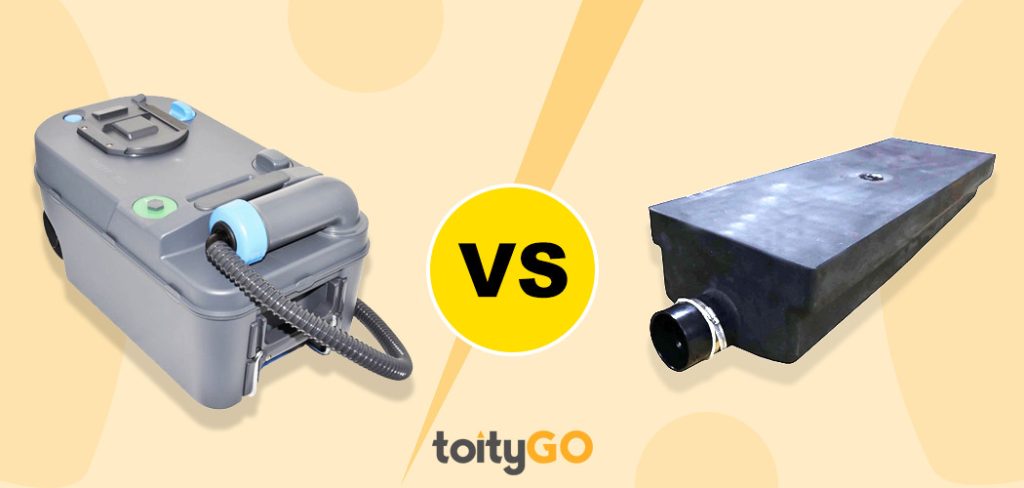
What is a Cassette Toilet?
A cassette toilet is a type of portable toilet used in recreational vehicles. The toilet is held in a cassette that can be removed and emptied when it is complete. A cassette toilet is a self-contained unit that does not require a water connection. It is also called a portable chemical toilet.
What is a Black Tank?
A black tank is a holding tank on an RV that stores water used for showering, washing dishes, and flushing the toilet. The black tank’s water is typically wastewater containing sewage and other contaminants. Typically, they range from 15 to 50 gallons in size.
What Are the Benefits of Using a Cassette Toilet and Black Tank Systems? (Pros)
Cassette Toilet
Cassette toilets have many benefits over traditional black tank systems. They are generally much more efficient and use less water, which is great for those looking to save on their camping costs. Additionally, cassette toilets often come with a built-in waste tank, so you don’t have to worry about dealing with any waste tanks or hoses while you’re on the go.
Cassette toilets also come in various sizes for different applications, and many cassette toilets can be used with cassette tank inserts for even more flexibility. If you’re looking for a reliable and efficient camping toilet, cassette toilets are the way to go!
Black Tank
On the other hand, a black tank collects all the wastewater from the sink, shower, and head. It requires periodic dumping into a proper waste disposal system.
The main benefit of using black tank systems is that cassette toilets are easy to use without the need for any tools. Easy to install. Black tanks must be periodically emptied of solids and sludge or become damaged.
What Are the Drawbacks of Using a Cassette Toilet vs Black Tank Systems? (Cons)
Cassette Toilet
The cassette needs to be emptied after every use and it is very difficult and need time to deep clean.
Black Tank Systems
The smell and sludge that can build up over time. Black tanks solids and sludge can become damaged.
Cassette Toilet Vs. Black Tank
Cassette Toilet and Black Tank are both popular with campers. There is always an argument between them. Their pros and cons counterbalance each other. Although there are some similarities in function, there are several differences between them. I am highlighting the differences; it is up to you to choose.
Size:
Cassette toilets are tiny and take up less space, while black toilet tanks are much larger and can hold up to 15-50 gallons.
Installation and Removal:
There are no problems with the installation and removal of cassette toilets. Every time you take out the tank, pull a lever to take it out; No equipment is required. On the other hand, taking apart the Black Tank is a bit of a hassle.
Regular Cleaning:
Between these two, regular cleaning is not much trouble. The tank of the cassette toilet should be opened, and insides waste should be thrown out. On the other hand, the black tank has a waste outlet; the internal waste can be easily removed by piping.
But in the case of deep cleaning, it’s easy to clean Cassette Toilet from a black tank because all places of Cassette Toilet can be easily reached, black tank does not have such facilities.
Empty Time:
Cassette toilets must be emptied after 2 to 3 days due to small space; in this case, a black tank can take up to 10-30 days to empty. It depends on the number of people and usage of the van.
Usage For:
Cassette Toilet is only used for toilet waste. Black tanks are used for showering, washing dishes, and toilet waste. Many use black tanks only for toilet waste.
Usage Place:
Cassette Toilet can be used in all types of small-big vans. On the other hand, the black tank size is generally large, so it can be used only in big vans.
How to Get Rid of Your Old Black Tank and Install the Cassette Toilet
If you’re replacing your black tank with a cassette toilet, there are a few steps you need to take to properly remove the old tank and install the cassette toilet.
- You will need to purchase a cassette tank adapter or cassette toilet bowl, depending on which you are using.
- Disconnect the hoses from your black tank and remove them from your RV.
- Install the cassette toilet bowl according to the manufacturer’s instructions.
- Reconnect the hoses between the cassette toilet and your RV.
- Prime the cassette toilet by filling it with water using a garden hose.
Now that you have replaced your cassette tank with the cassette toilet, you’re ready to use it.
FAQs
Cost Comparison Between the Two Systems:
Cassette toilet is more expensive than black tank. Black tank costs about $60 to $200. cassette toilet can be cost anywhere from $140 to $300.
Where Can I Buy My Cassette Toilet?
Cassette toilets can be bought at the most recreational vehicle and camping stores. You can also find them available for purchase on online retailers like Amazon. If you are not sure where to find a cassette toilet near you, contact the store or website in advance to inquire.
How Many Flushes Does a Cassette Toilet Have?
A cassette toilet typically has two flushes. After the first flush, it is recommended to close the lid before flushing again. This will provide you with your second flush of water after which there should be no more waste left in the cassette toilet.
How Often Should You Empty a Cassette Toilet?
Cassette toilets must be emptied more often than black tanks because they have a smaller capacity. Most cassette toilets need to be emptied every 1-3 days, depending on how many people use them.
How Long Do Cassette Toilets & Black Tanks Last?
Cassette toilets last anywhere from 5 to 10 years on average. How long a cassette toilet lasts depends on how often it is used and how well it is taken care of.
Black tanks typically last around 3-5 years with regular use, but they can last up to 10 years with proper maintenance. Unfortunately, there is no word on taking proper care of a cassette toilet tank.
Conclusion
I hope “Cassette Toilet Vs Black Tank” blog post has been helpful to you. If so, please share it with your friends and family! As always, we’re happy to answer any questions that might come up in the comments section below.




Correction… there are two waste waste water tanks on an RV:
1. Grey Water Tank (Shower)
2. Black Water Tank (Toilet)
At the pump station, release very water after releasing the black water… this will force the sludge out.